
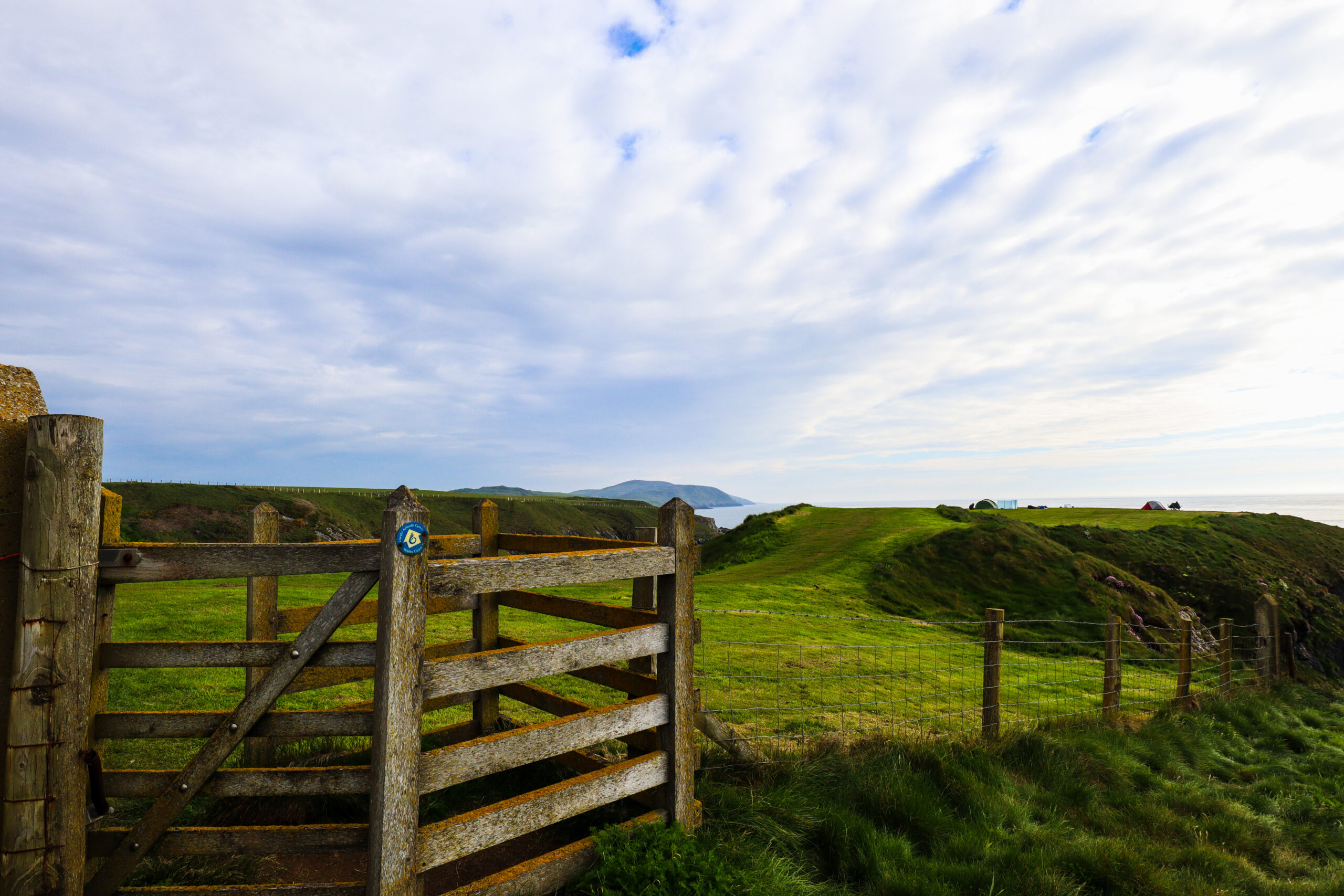
The Llŷn’s famous beaches earn their reputation — but the coastline has dozens more, tucked down single-track lanes and farm access roads, that most visitors never find. This trail is for anyone happy to walk a little further for a beach with no queue for the car park.
Porth Iago, near Aberdaron on the peninsula’s western tip, is a small, near-circular cove backed by grassy cliffs — genuinely one of the most photogenic beaches in Wales, and it stays quiet because it’s a short walk from a farm car park rather than a roadside pull-in. Porth Colmon, a little further north, is a sheltered fishing cove with a slipway rather than sand, better for a quiet picnic and a paddle than a beach day, but beautiful for it.
Traeth Penllech is the long one: a wide, wild stretch of sand reached by a 15–20 minute walk down a farm track, which is exactly why it rarely feels crowded even on a warm Saturday. Porth Ceiriad, on the south coast near Abersoch, is better known to surfers than to families — a genuinely good swimming and surfing beach that somehow still gets overlooked in favour of its more famous neighbour.
And then there’s Porth Oer — Whistling Sands — on the north coast near Aberdaron, named for the squeak the sand makes underfoot in dry weather. It’s better known than the others on this list, but it’s still a fraction as busy as Abersoch, and the walk down from the National Trust car park is short and easy for families.
A practical note worth including on the site: several of these beaches (Porth Iago and Traeth Penllech especially) are reached across private farmland with small honesty-box parking charges — a few pounds that goes straight to the farmer maintaining the access. Worth flagging to visitors so it doesn’t come as a surprise, and worth pointing out as another small example of tourist spending landing directly with a local family rather than a council car park machine.
A few of these coves are only reachable down farm tracks or National Trust coastal paths rather than direct roads, so a proper OS map or the National Trust’s own access notes are worth checking before you set off — some become tidal, cutting off the sand for an hour either side of high water. Parking is often a grass verge, a farmer’s field in summer, or a small National Trust car park rather than a paid municipal one, so cash for an honesty-box donation is worth carrying. llyn.live’s Explore page shows live wind, swell and water-quality data pulled from Open-Meteo and Natural Resources Wales for the more monitored beaches on the peninsula — most of these wilder coves fall outside that official monitoring network, which is exactly why checking wind direction and tide before you go matters more here than at Abersoch or Pwllheli.
None of these beaches have lifeguard cover, so llyn.live’s live water-quality and conditions data is worth checking before anyone swims — that’s exactly the kind of practical detail that makes a wilder beach trip feel safe rather than reckless.
Photo: Porth Iago — EinirWOwen / Wikimedia Commons (CC BY-SA 4.0).